


The trump tariffs crypto crash of October 2025 stands as a stark reminder of how geopolitical events can dramatically impact the cryptocurrency markets. When former President Donald Trump announced a 100% tariff on Chinese imports, the cryptocurrency market was immediately sent into a risk-off mode, leading to significant deleveraging and an unprecedented wave of liquidations.
Understanding the Trump China Tariffs and Their Impact on Bitcoin
The announcement of the tariffs had an immediate effect on global markets, but the tariff announcement crypto impact was particularly severe. The crypto derivatives market, which reached a historic $85.7 trillion in trading volume in 2025, saw a dramatic shift. Open interest peaked at $235.9 billion on October 7, but the subsequent crash saw over $70 billion wiped out within days. Bitcoin, often seen as a high-beta asset, experienced a 10-15% drawdown, demonstrating its volatility in response to geopolitical risk.
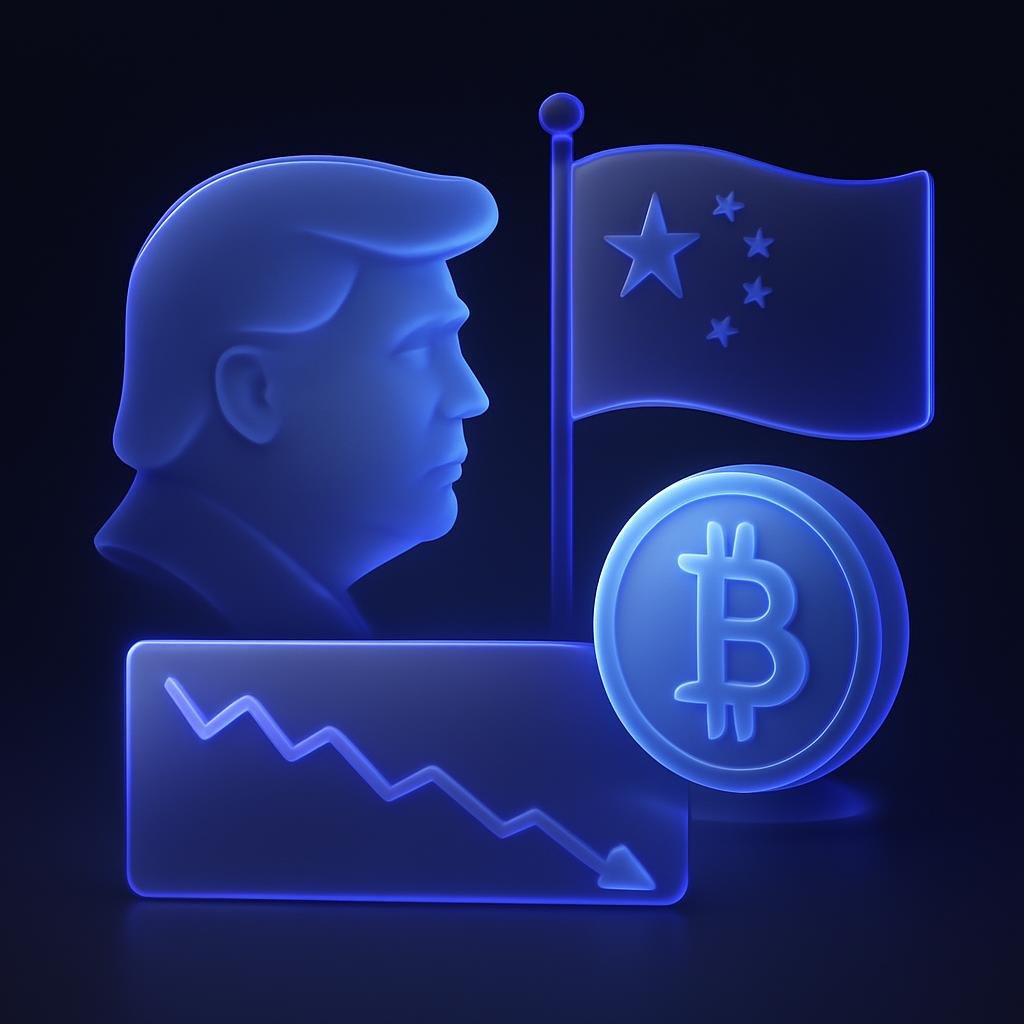
Table: Top Crypto Derivatives Exchanges in 2025
| Exchange | Market Share | Trading Volume |
|---|---|---|
| Binance | 29.3% | $25.09T |
| OKX | 12.5% | $10.71T |
| Bybit | 11% | $9.43T |
| Bitget | 9.5% | $8.14T |
Geopolitical Risk and the Macro Events That Followed
Trump's tariffs were not an isolated event. They were part of a broader shift in international trade policies that included the announcement of export controls on critical software. These macro events heightened the sense of uncertainty and contributed to a significant decline in market sentiment, with altcoins suffering up to an 80% loss in value. This episode underscores the importance of understanding geopolitical crypto crash dynamics and how they can precipitate massive market adjustments.
How Trump Tariffs Affected Crypto Markets
The bitcoin crash trump tariffs 2025 highlighted several key lessons for traders and investors:

- Risk Management: The necessity of employing robust risk management tools like stop loss and take profit orders to mitigate potential losses.
- Position Sizing: Proper position sizing to avoid excessive leverage and potential liquidation.
- Diversification: The importance of diversification to spread risk across various assets and cryptocurrencies.
During this period, Bitunix emerged as a notable alternative for traders, offering competitive leverage options up to 200x on BTC/USDT and ETH/USDT perpetual contracts. Bitunix's rapid growth, as highlighted by CoinGlass's report, showed it as the fastest-growing platform in both year-over-year and month-over-month terms.
Learning from the Crypto Market's Response to Geopolitical Events
The 2025 trade war crypto impacts serve as a crucial case study in understanding the interplay between policy shocks and market reactions. As the global markets shifted in response to policy changes, traders and investors were reminded of the necessity to stay informed about policy changes and their potential effects on cryptocurrency markets.

Open interest and trading volume metrics are essential for assessing market dynamics. The high beta of Bitcoin, with a 2.5-3.0 coefficient to global liquidity, highlighted how macro events can lead to significant price movements.
Conclusion
The trump tariffs crypto crash of 2025 is a potent example of how geopolitical decisions can ripple through financial markets, particularly impacting volatile sectors such as cryptocurrencies. By understanding these dynamics, traders can better navigate the complex landscape of cryptocurrency trading, employing strategies like hedging and diversification to protect their portfolios from unforeseen geopolitical shocks. Whether through leveraging platforms like Bitunix or employing advanced trading tools, preparedness is key to managing geopolitical risk effectively.


Comments (...)
Loading comments...
Leave a Comment
Your email address will not be published. Required fields are marked *